"Alter Teich" Nature Reserve
Stemwede
"Alter Teich" Nature Reserve
Table of contents
Stemwede
"Alter Teich" Nature Reserve
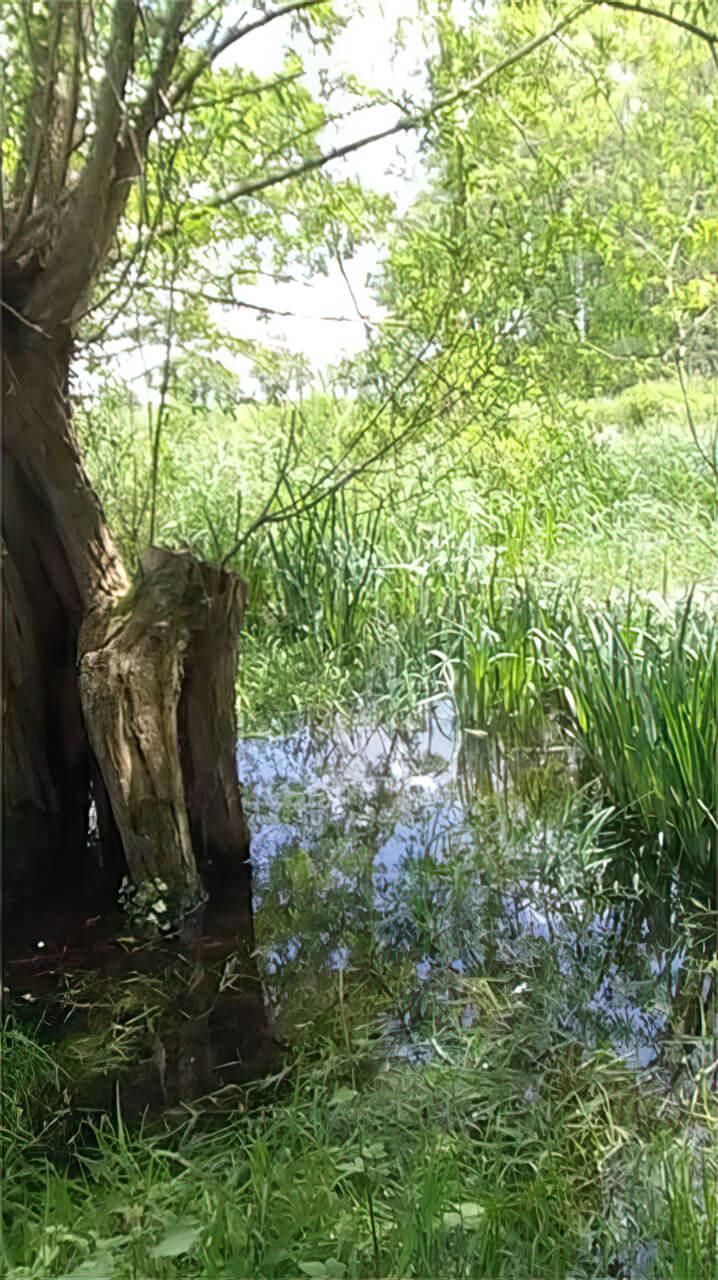
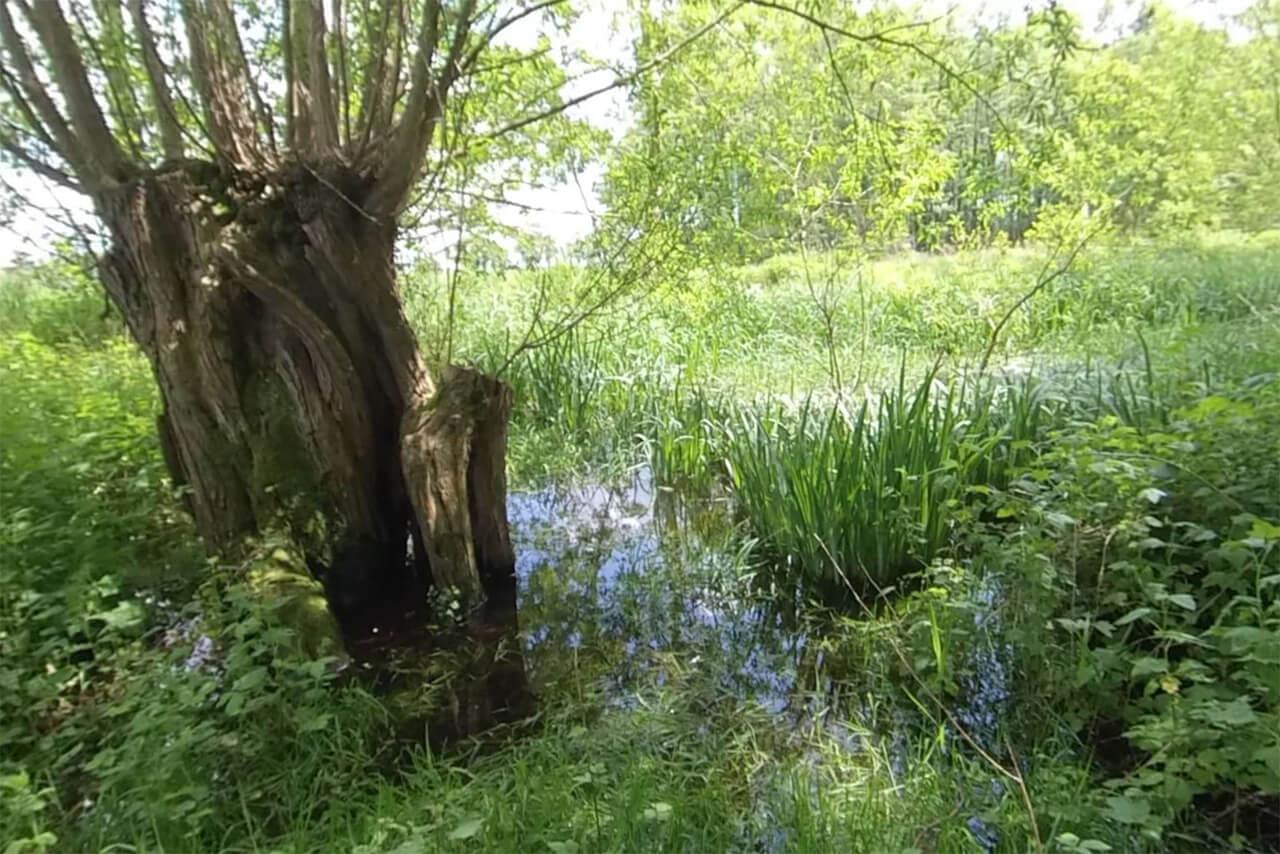
The area consists of a 44-hectare, richly structured grassland-shrub complex featuring wet grassland fallow land, remnants of alder swamp forest, and near-natural small water bodies in the northeast of Destel, located in lowland and lowland fringe areas on anmoorgley and gley soils.
In the center of the area, large tracts of fallow grassland—some of which are wet—catch the eye. Here, one can also find remnants of alder swamp forests—some of which have been heavily drained—on lowland peat soils, as well as a shallow pond. This part of the area is notable for hosting a population of the marsh grasshopper, which is critically endangered statewide.
SOIL TYPE: GLEY The name of this soil type is derived from Russian and translates roughly as “mud.” Soil becomes muddy when it has a high water content. Gley soils are soils whose properties are altered by high groundwater levels.
SOIL TYPE: ANMOORGLEY If the humus content of groundwater-influenced soils ranges between 15 and 30 percent, the soil is classified as an anmoorgley.
HISTORICAL CONTEXT It was only with the expansion of the Buschmannsorter Graben that intensive farming became possible in the outlying areas. The field name is very old and suggests the presence of an artificially created body of standing water with an inlet and outlet (the Buschmannsorter Graben), similar to the Lever Teich (Großer Diekfluss, e.g., as a mill pond). It cannot be conclusively determined what form the land use took here—for example, as a mill pond, fish pond, or water reservoir.
Settlement development in the outlying areas likely did not take place until much later. “A windmill used as a farm mill was located on the Rümke farmstead at Am Alten Teich. It was built for the farm’s own use and had a grinding mechanism for livestock feed. It operated without a motor, and sails were hoisted when wind conditions were favorable. In 1950, it was demolished due to dilapidation.”
Stemwede
"Alter Teich" Nature Reserve
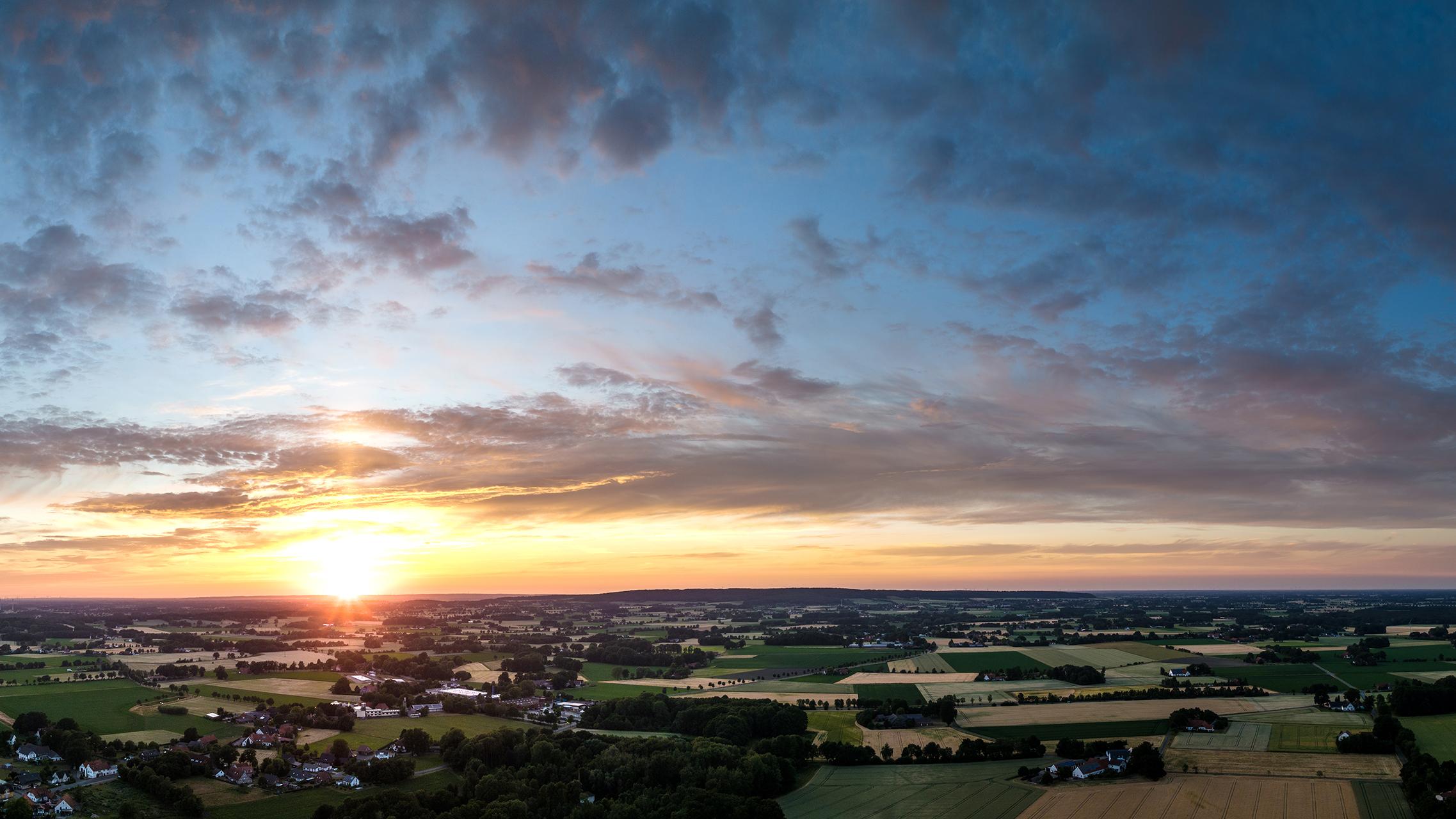
Here you can see a 360° panorama of the surrounding area.